Lecture: The Quantum Information Revolution from Wiesner to Turing
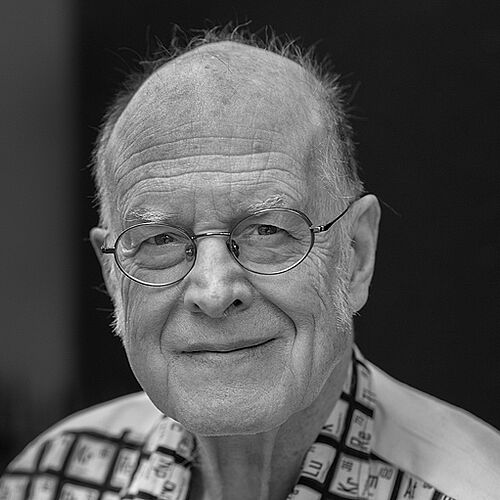
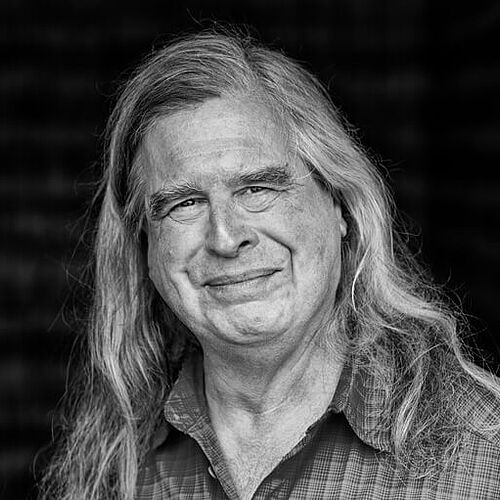
Charles H. Bennett, Gilles Brassard
The Quantum Information Revolution from Wiesner to Turing
Charles H. Bennett and Gilles Brassard
ACM A.M. Turing Award 2025
The quantum revolution in computer science began two years after the establishment of the Turing Award. In his seminal paper « Conjugate Coding », written in 1968, Wiesner was the first to suggest that quantum effects, far from being a hindrance to Moore’s Law, could be used to perform information processing tasks outside the scope of Shannon and Turing's classical theories. This led us to develop protocols capable of achieving perfect secrecy without consuming as many bits of shared secret key as the message being transmitted, a task that Shannon had shown to be impossible in the mid-twentieth century. Our first paper along those lines, "How to reuse a one-time pad safely even if P=NP", was rejected in 1982 by the ACM Symposium on Theory of Computing (STOC). Forty-four years later, we received the Turing Award for persisting with the idea. In this talk, we shall discuss the history of quantum information from the initial ideas of Wiesner to quantum cryptography and quantum teleportation, and ultimately to its use to link Turing’s theory of computability to the more modern theories of computational complexity and interactive proofs.
The 13th Heidelberg Laureate Forum took place from September 13–18, 2026. #HLF26
The Heidelberg Laureate Forum (HLF) is an annual networking conference where 200 carefully selected young researchers in mathematics and computer science spend a week interacting with the laureates of the most prestigious awards in their disciplines: the Abel Prize, ACM A.M. Turing Award, ACM Prize in Computing, Fields Medal, IMU Abacus Medal and Nevanlinna Prize.
The opinions expressed in the videos do not necessarily reflect the views of the Heidelberg Laureate Forum Foundation or any other person or associated institution involved in the making and distribution of these videos.